


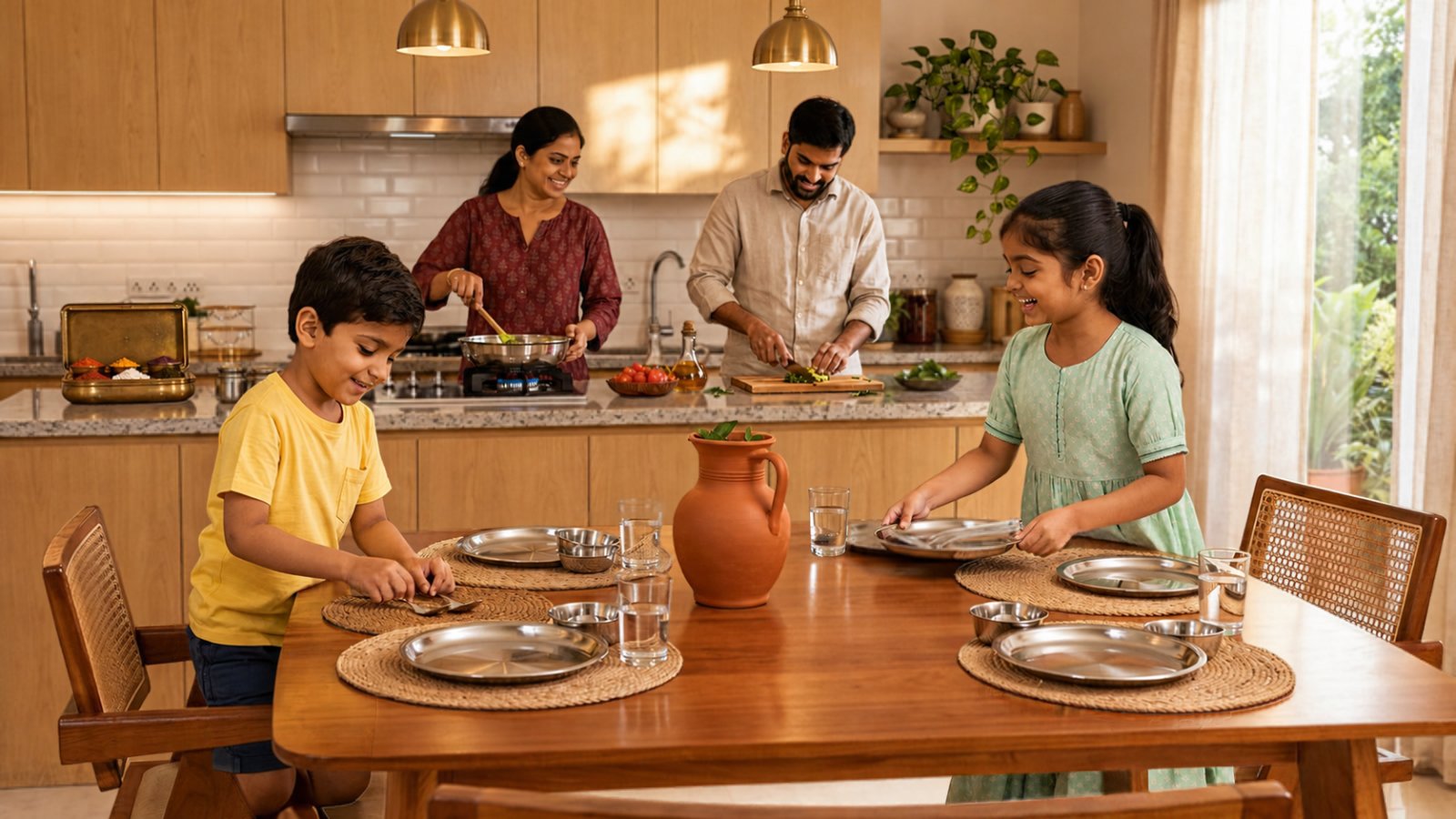
Most of us want the same things for our children: a happy home, a good education, and the confidence to handle life. Yet in many Indian households, sons and daughters quietly grow up with different rules, different jobs and different expectations. Raising sons and daughters equally does not mean treating them identically or turning the house upside down. It means giving every child the same chances to learn, to feel, to help and to be heard.
This guide is for mothers (and fathers, aunts and grandparents who read over our shoulders) who want practical, everyday ways to do that. There is no lecture here and no “right” family structure. Whether you live in a joint family in Lucknow or a nuclear one in Bengaluru, small habits add up.
Why raising sons and daughters equally starts at home
Children copy what they see far more than what we say. If they watch Papa read the newspaper while Mummy clears the table, no speech about equality will outweigh that picture. The good news is that the same logic works in our favour: small, repeated, visible habits shape how a child sees the world.
UNICEF’s parenting guidance makes the same point. Its tips for parents of young children say that children learn a great deal by watching you, and that household tasks should be split up so that everyone helps. UNICEF’s research on India also notes that girls tend to carry a heavier share of unpaid domestic and caregiving work than boys, partly because of social norms, and that this can eat into their time for study, rest and play.
Nobody is blaming mothers here. Most of us were raised with these patterns ourselves. Noticing them is the first step, and changing a few is enough to start.
Same chores for every child
Chores are the easiest place to begin, because the change is visible every single day. The rule is simple: the job depends on the child’s age and ability, never on whether the child is a boy or a girl.
Age-appropriate jobs that work for both
- Ages 2 to 4: putting toys in a basket, dropping dirty clothes in the laundry bin, wiping a spill with a small cloth.
- Ages 5 to 7: laying and clearing their own plate, watering plants, sorting socks, helping fold towels.
- Ages 8 to 11: packing their school bag, making their bed, helping with simple cooking such as washing vegetables or making a sandwich.
- Ages 12 and up: washing their own clothes sometimes, cooking one simple meal, cleaning their room, helping younger siblings with homework.
Make it a rota, not a favour
A weekly chart on the fridge takes the “why me?” out of the conversation. Rotate tasks so that nobody is stuck with the kitchen every day while someone else gets the easy job. If you have domestic help, the same principle applies: children still look after their own room, plate and belongings.
Expect grumbling. That is normal for any child, boy or girl. Stay calm, keep the chart, and thank them for the help the way you would thank a guest, without making it a big reward.
Toys, colours and activities without labels
Walk through any toy shop and you will see the sorting: pink aisles, blue aisles, cooking sets for one and cars for the other. At home, we do not have to follow it.
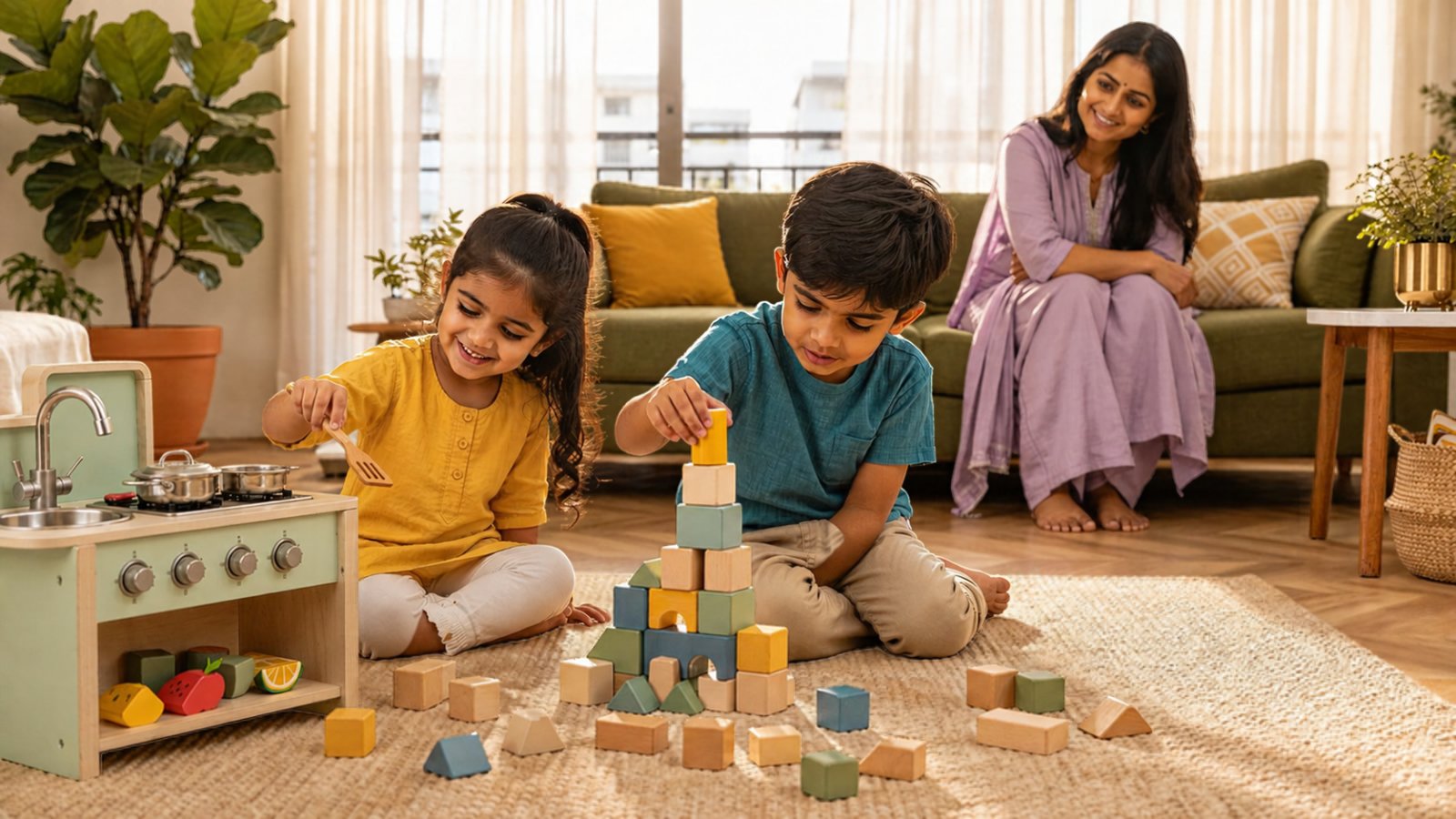
UNICEF’s guidance for parents encourages exactly this: let children explore interests “regardless of gender”, from dolls and blocks to dancing and dinosaurs. A boy who loves a toy kitchen is learning to cook. A girl who loves building is learning to solve problems. Neither is odd.
- Offer a mix of toys to every child: blocks, books, dolls, balls, art supplies, kitchen sets.
- Let them pick their own colours. A boy can love pink and a girl can love green.
- Enrol them in the activities they are curious about, whether that is cricket, kathak, football, painting or chess.
- If a friend or relative gifts a gendered toy, say thank you and let the child decide whether it becomes a favourite.
If your child asks, “Is this a girl toy?”, a simple answer works: “Toys are for anyone who enjoys playing with them.”
Teaching sons empathy and household skills
Many boys grow up hearing “be strong” and “don’t cry” long before anyone teaches them how to cook an egg or comfort a friend. UNICEF’s parenting tips specifically advise against lines like “boys don’t cry”. Boys feel everything girls do; they just get less practice talking about it.
Give feelings a name
When your son is upset, put words to it: “You look disappointed that your friend left early.” Over time, he learns to recognise and share feelings instead of burying them. Read picture books together where boys are shy, scared or gentle, and talk about them.
Teach life skills early
A young man who can cook dal-chawal, wash clothes and iron a shirt is not “helping” his future partner; he is simply looking after himself. Start young and keep it matter-of-fact. Let him make mistakes: a slightly burnt roti is a good teacher.
Let him care for others
Ask your son to look after a younger cousin, a pet or a grandparent’s medicine reminder. Caring for others is a skill, and it is built by doing it. Fathers can model it best by being hands-on with children, not “babysitting”.
Teaching daughters to speak up and handle money
Girls are often praised for being quiet, accommodating and “no trouble”. Those are nice qualities, but a child who never says “I disagree” will find it hard to say it as an adult.
Make space for her opinion
- Ask for her view at the dinner table, and let her disagree politely.
- Replace “Don’t argue” with “Tell me why you think that.”
- Let her order for herself at a restaurant, speak to the shopkeeper, or ask the teacher a question.
- Praise effort and courage, not only good behaviour or looks.
UNICEF’s tips also suggest encouraging girls to keep trying in maths and science. If your daughter says “I’m not good at maths”, gently reply, “You are not good at it yet. Let’s practise.”
Money is for girls too
Children of both genders should learn to save, spend and plan. Give pocket money in an amount that suits your family and her age, let her decide how to use it, and talk about needs versus wants. As she grows, involve her in simple money conversations, such as comparing prices or planning a festival gift budget. For simple ideas, our post on teaching kids about money is a good place to start.
A girl who understands money, and knows her opinion is welcome, is better prepared for any path she chooses.
The language we use without noticing
Much of what children absorb is not what we plan to teach. It slips out in passing remarks. Try listening to your own phrases for a day.
| What often slips out | A better option |
|---|---|
| “Boys don’t cry.” | “It’s okay to feel sad. Come here.” |
| “Be a good girl and sit quietly.” | “Please use your indoor voice.” |
| “That’s a girl’s job.” | “Everyone in this house helps.” |
| “You throw like a girl.” | “Nice try, let’s practise your throw.” |
| “Let your brother have it, he’s a boy.” | “Let’s take turns.” |
| “What will people say?” | “What do you think is right?” |
You will not catch every slip, and you do not need to. If one comes out, you can simply say, “Actually, I’d like to say that differently.” That models something valuable too: it is fine to correct ourselves.
Respect and consent in age-appropriate terms
Teaching respect is part of equality, for sons and daughters alike. The ideas are simple, and you can introduce them gently from the toddler years.
Toddlers and preschoolers
Teach that everyone’s body belongs to them. Ask, “Would you like a hug or a high-five?” when relatives visit, and do not force a child to kiss or sit on anyone’s lap. Name body parts correctly and teach the idea of “private” in a calm tone.
School-age children
UNICEF’s tips for parents of children aged 6 to 10 suggest giving children clear, simple guidance on safe and unsafe touch, and age-appropriate information on personal space, consent and when to speak up. They also advise telling children that adults should not ask them to keep secrets, and helping them identify a safe adult they can talk to. You can read the full list on the UNICEF positive parenting tips for ages 6 to 10.
Day-to-day respect
- Teach every child that “no” and “stop” must be respected, in play, in teasing and in tickling.
- Expect the same manners from sons and daughters towards each other and towards domestic help.
- Treat a “no” from your child with respect where you safely can; they learn to honour it in others.
If you have specific worries about your child’s safety or wellbeing, please speak to a qualified professional, such as a paediatrician or a trained child counsellor.
Parents modelling equal partnership
This is the part that works quietly in the background. Children watch how adults divide work, make decisions and speak to each other. UNICEF’s guidance notes that in many families mothers end up doing most of the childcare, and encourages sharing the load.
You do not need a perfect 50-50 split to show your children something good. Small, visible changes help:
- Both parents take turns with school pick-ups, homework and bedtime stories.
- Papa cooks sometimes, and children see it as normal rather than a “treat”.
- Big decisions, including money and holidays, are discussed with each other in front of the children.
- Disagreements are handled respectfully, without shouting or put-downs.
- Mothers are allowed to rest, to have hobbies and to say, “I need a break.”
If you are a single parent, or if the extended family handles most chores, the principle still holds. Share the work with your children, and let them see that care and effort belong to everyone in the house.
Handling comments from relatives
You may do all of this beautifully and still hear, “Arre, why is he in the kitchen?” or “Girls should learn to adjust.” In Indian families, these remarks usually come from affection and habit, not hostility. A few approaches can help you keep the peace without giving up your values.
- Stay light. A smile and “He likes cooking, and he makes great poha” can end the discussion before it starts.
- Do not argue in front of the child. If a comment bothers you, talk to the relative privately, calmly and kindly.
- Stay consistent. The children learn from what you do daily, not from winning a debate at a wedding.
- Explain to the child later. If a relative says something you disagree with, you can say at home, “Dadi grew up in a different time. In our house, we do things this way.”
- Find allies. Often one grandparent or uncle is quietly supportive. Let them notice the child’s progress.
Over time, many relatives soften when they see a helpful, confident and kind child in front of them. If you also want to build your children’s confidence generally, our post on ways to build self-esteem in your child may help, and so may 8 ways to unspoil your child if you worry about children expecting to be served.
Start small this week
You do not need to change everything at once. Pick two or three things:
- Put up a shared chore chart this weekend.
- Offer one “unexpected” toy or activity to each child.
- Replace one gendered phrase you tend to use.
- Ask your daughter for her opinion on one family decision, and ask your son how a friend must have felt.
Raising sons and daughters equally is a long, ordinary and rewarding project, done in thousands of small moments over breakfast, homework time and car rides. You are already doing more than you think.